Heroic Outfitters
Related Articles



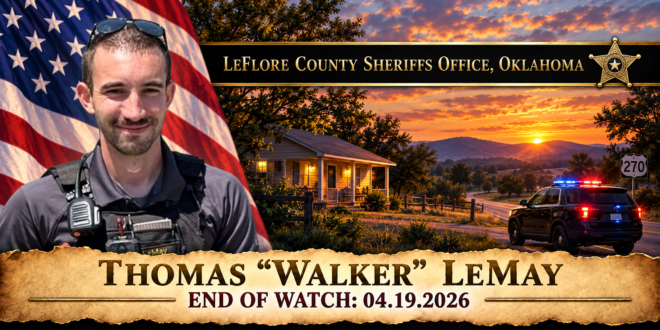
A family, a sheriff’s office, and a community in Oklahoma are living with an absence that cannot be repaired. Deputy Sheriff Thomas “Walker” LeMay was 30 years old when his life ended in gunfire on April 19, 2026, leaving behind the unbearable fact that a person who went to help someone else would not return.
LeMay served with the LeFlore County Sheriffs Office. His final call was a welfare check at a residence off Highway 270 in Wister, a response grounded in concern for another person’s well-being. He was struck during an exchange of gunfire and pronounced dead at the scene. The loss is permanent, and the unfairness of it is difficult to measure.
A Life Reduced to an Absence
The available facts about Thomas “Walker” LeMay are brief, but they carry the weight of a whole life. He was a 30-year-old deputy sheriff, a public servant whose name was attached to the difficult, often unseen work of answering when someone needed help. Behind the title was a human being known to someone, missed by someone, and now mourned in a way no official record can fully describe.
There will be an empty place where LeMay should be: in the lives of the people who loved him, among the colleagues who served beside him, and within the community he was sworn to serve. No supplied record can responsibly fill in the private details of those relationships. It can only acknowledge the scale of what has been taken from them: time, presence, plans, and the ordinary future that should have remained possible.
Grief does not become smaller because the public knows only a few facts. Sometimes the simplest truths are the heaviest ones. Thomas “Walker” LeMay was here. He served. He was 30. Then, while responding to a call involving another person’s welfare, he was killed. A department and a community are left to speak his name while facing the silence where his voice and presence should be.
He Went Toward Someone Else’s Need
A welfare check begins with concern: the possibility that someone may be in danger, in distress, or unable to protect themselves. LeMay responded to such a call at a residence off Highway 270 in Wister, Oklahoma. The record does not provide a full account of what he expected to find, and it would be wrong to invent one. What is known is enough: he went because another person’s well-being required attention.
That duty placed him in harm’s way. LeMay died from gunfire after being struck during an exchange of gunfire, according to the supplied officer record. He was pronounced dead at the scene. The words are factual, but they cannot make the event feel ordinary. A response intended to bring help ended with a deputy’s life taken and those waiting for him forced into grief.
There is heartbreak in that reversal, and there is justified anger in it too. A public servant should not be lost simply because he answered a call for help. The facts do not permit speculation about motive or outcome beyond LeMay’s death, but they do permit mourning the needless cruelty of a life interrupted while he was carrying out the responsibility he had accepted.
Remembering the Person, Not Only the Badge
The badge and rank matter because they identify the service Thomas “Walker” LeMay gave to LeFlore County. But they are not the whole of him. Before the uniform, beneath the title of Deputy Sheriff, he was a person with a life that cannot be summarized by the circumstances of his death. The public may not know every part of that life, yet its value does not depend on how many details can be published.
His name deserves more than a line in a ledger or a date beneath a photograph. It deserves to be held with care: Thomas “Walker” LeMay, a 30-year-old deputy of the LeFlore County Sheriffs Office, remembered for answering a welfare check and for paying the highest possible price while serving others. That is not a complete portrait, but it is a truthful one.
For his department, the loss is also a wound in the daily fabric of service. The work continues, but continuing does not mean being unchanged. Every future call may carry the memory of the deputy who did not come back from Wister. Every person who says his name helps resist the erasure that time can bring, keeping the human being visible beyond the incident.
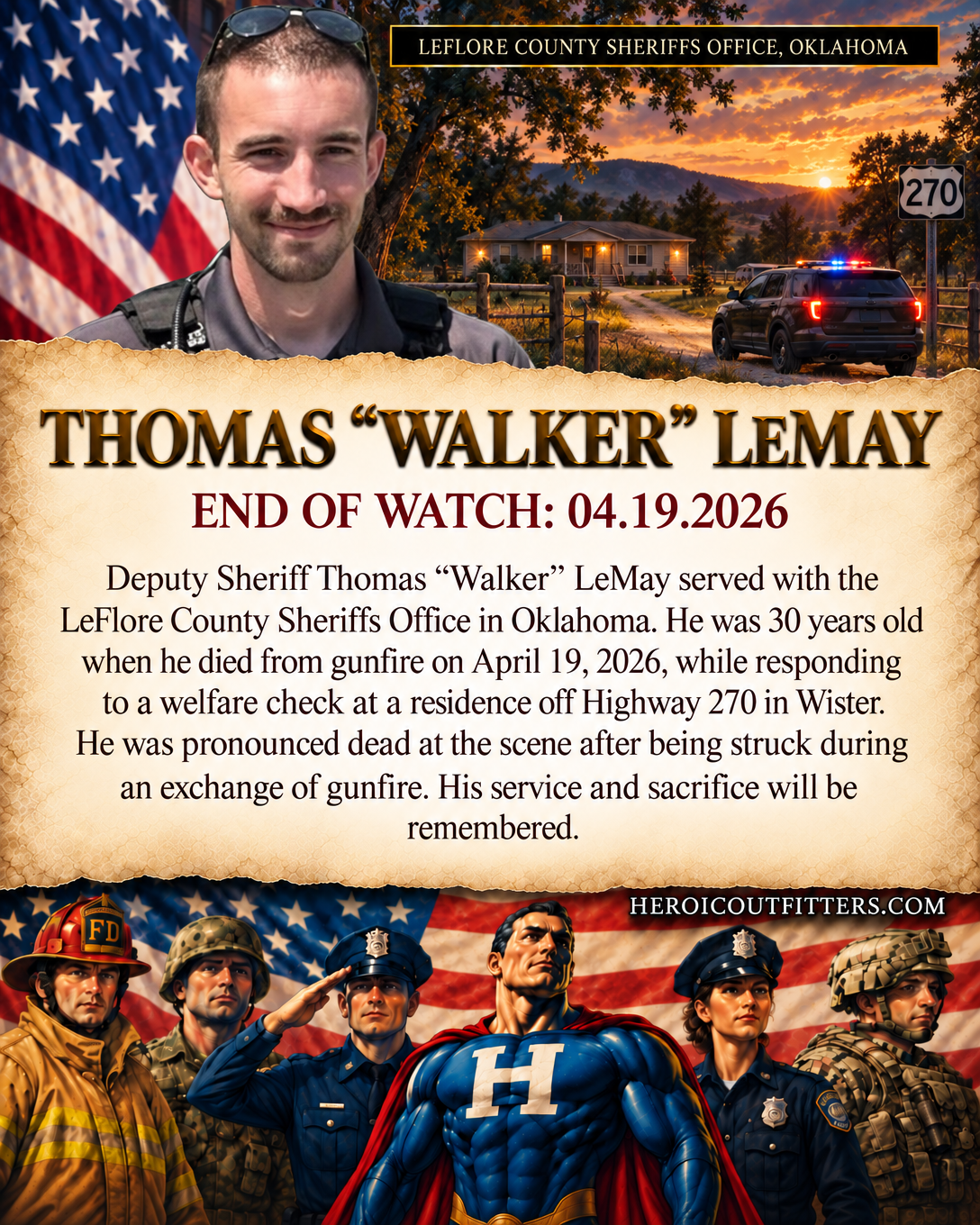
Thomas “Walker” LeMay’s end of watch was April 19, 2026. He died from gunfire while responding to a welfare check, and the finality of that sentence will never explain the full measure of what his death means to the people left behind. It can only mark the moment a deputy’s service ended and a family, agency, and community began carrying an absence.
May his name remain connected not only to the violence that ended his life, but also to the purpose that brought him to that residence: responding when someone might need help. Deputy Sheriff Thomas “Walker” LeMay served the LeFlore County Sheriffs Office in Oklahoma. He was 30 years old. He should still be here.