 Heroic Outfitters
Related Articles
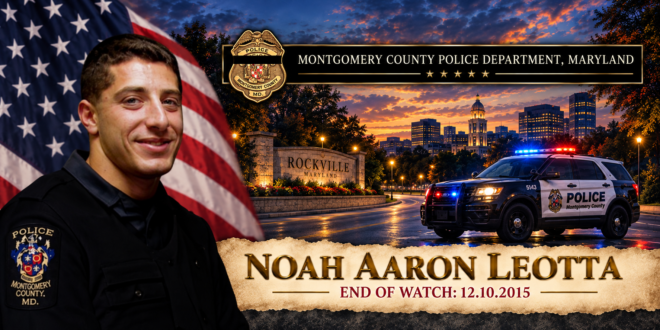
Officer Noah Aaron Leotta was 24 years old when an impaired driver struck him during a traffic stop. He was working to keep other families safe from the very danger that took his life. Seven days later, on December 10, 2015, he died from his injuries.
This Noah Leotta memorial remembers a young officer whose service lasted nearly three years, whose enthusiasm reached the people around him, and whose death helped change Maryland law. It also remembers the son and brother his family should have been able to bring home.
A young officer who loved the work
Noah served with the Montgomery County Police Department in Maryland. After completing his training, he remained in the department’s 4th District as a patrol officer. The department’s official Roll Call of Honor remembers his passion for serving the community and the enthusiasm he brought to the job.
That record matters because a badge and an End of Watch date can flatten a whole life into a few official facts. Noah was a person at the beginning of adulthood and a career. He had parents and a sister. According to the Officer Down Memorial Page, he had served almost three years.
The danger he was trying to prevent
On December 3, 2015, Noah was assigned to Montgomery County’s Holiday Alcohol Task Force. He was conducting a traffic stop on Rockville Pike near Edmonston Drive when another vehicle struck his patrol car and then struck him. He was taken to Suburban Hospital and remained on life support until his death one week later.
The cruelty of the circumstances is hard to ignore. Noah was enforcing impaired-driving laws when an impaired driver took away his future. Calling that a risk of the job does not make it acceptable. The harm was preventable, and a family was left with a loss no sentence or law could reverse.
The driver was later convicted on charges connected to Noah’s death and sentenced to 10 years in prison, according to ODMP. Accountability mattered, but it could not return a 24-year-old son and brother or restore the decades of life he should have had.
Noah’s name became a call to prevent another death
In 2016, Maryland enacted the Drunk Driving Reduction Act, widely known as Noah’s Law. The Maryland General Assembly’s legislative record shows that the law strengthened ignition-interlock requirements and increased certain license-suspension periods. It took effect on October 1, 2016.
Maryland continued strengthening the program in 2024. The Maryland Motor Vehicle Administration described that expansion as closing a gap in the original law and again recognized Noah’s family and the advocates who carried his name into the effort.
A law cannot repair the Leotta family’s loss. It can force the public to confront how often impaired driving is treated casually until someone does not come home. Noah’s name now stands inside a prevention effort meant to stop another family from receiving the same unbearable news.
A legacy carried forward
Montgomery County has continued honoring Noah through memorial observances, sobriety checkpoints, a scholarship, and a police K9 named for him. These tributes are different in form, but they share a purpose: keeping his life present in the community he served.
The department’s remembrance describes an officer who came to work early, smiled, helped fellow officers, and did not seek attention for himself. Those are the details that make the loss personal. They show the human being beyond the headlines and explain why his absence still matters.
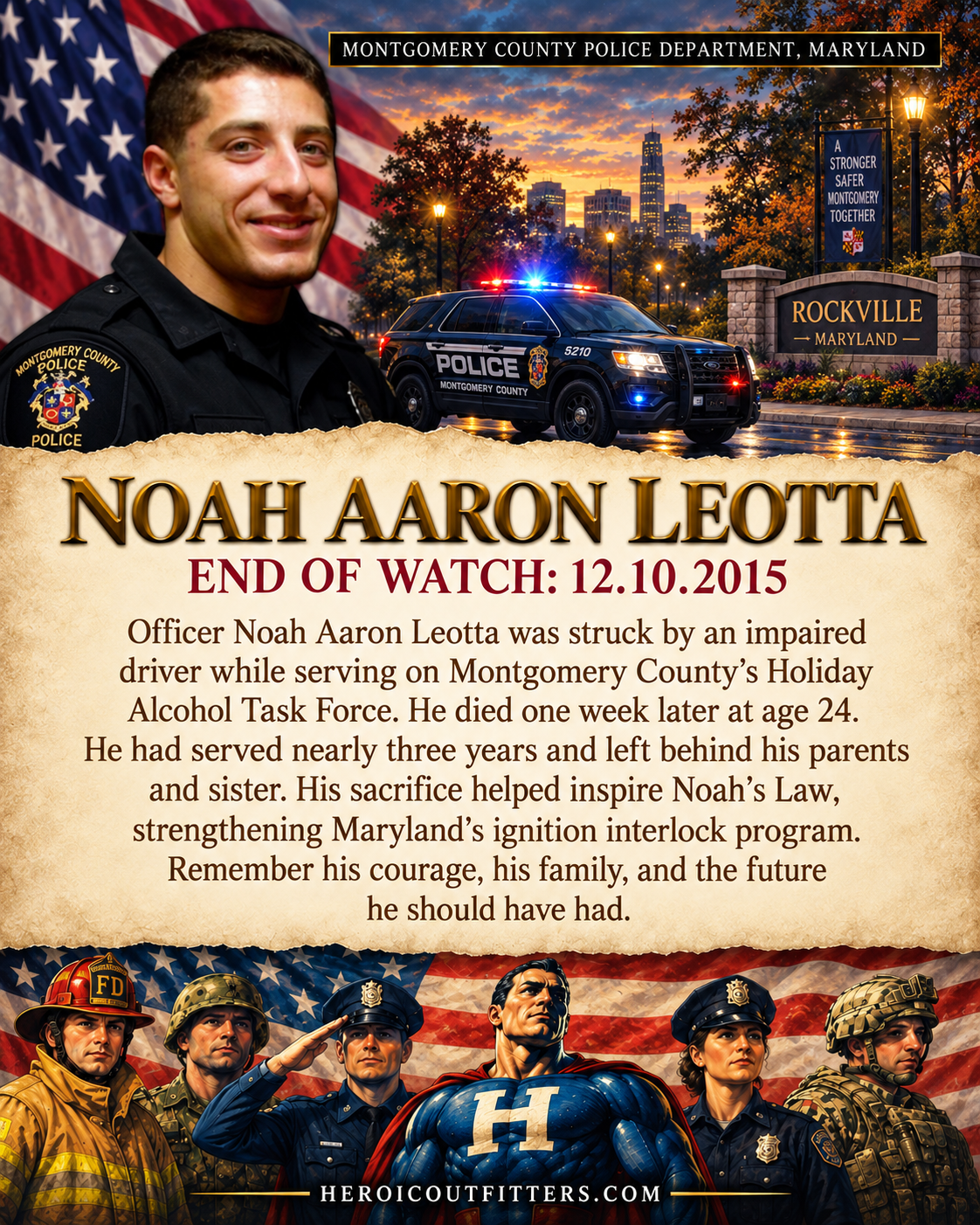
Remembering Officer Noah Aaron Leotta
Noah should have had years to keep serving, laughing with his family, and building the life he had only begun. We remember him with sorrow for what was stolen, anger at a preventable death, and gratitude for the service he gave.
Police Officer III Noah Aaron Leotta
Montgomery County Police Department, Maryland
Badge 2747
End of Watch: December 10, 2015
Age: 24
Read more stories of service and sacrifice in our Heroes collection.

Noah’s Law is an important part of his legacy, but it cannot be separated from the son and brother his family lost. The fact that he was conducting an impaired-driving stop when an impaired driver struck him makes the prevention work named for him especially poignant.
Exactly. Noah’s Law carries weight because it connects his service to prevention, but the law can never replace the son and brother his family lost. The 2024 expansion may close a gap in the original program, yet his name still begins with the life that was taken on Rockville Pike.
Noah was trying to protect other families from impaired driving when an impaired driver struck him during that traffic stop. The law carrying his name cannot give his family back the decades they lost, but stronger ignition-interlock requirements turn his service into a concrete effort to prevent another family from receiving the same news.
That connection between Noah’s work and the law named for him is important. As you note, stronger ignition-interlock requirements cannot restore the years his family lost, but they give his name a practical role in preventing the impaired-driving danger he was working to stop.
It matters that Noah’s name led to more than a memorial. Maryland’s 2016 law strengthened ignition-interlock requirements, turning the circumstances of his death into a concrete effort to prevent another family from facing the same loss.