Heroic Outfitters

Related Articles


A wife, a daughter, and a son are left to carry a loss no family should have to bear. On August 17, 2025, Police Officer Eric Estrada was fatally shot while responding to a domestic violence call. He was 32 years old.
The facts are brief, but the absence they describe is immense. A husband is gone. A father will not come home from this watch. A community has lost a public servant whose life was taken while he was answering a call rooted in danger and human suffering.
A Young Family Left With the Permanence of Loss
Eric Estrada’s survivors are named plainly in the verified record: his wife, his daughter, and his son. Those words hold the outline of a family now forced to live around an empty place, a future altered without consent, and memories that will carry both love and heartbreak.
No public account can measure what his children have lost, or what his wife must now endure. They are not merely the people listed after a line of duty death. They are the people whose days, plans, and sense of safety were torn open when Officer Estrada did not return.
Grief does not end when a memorial is published. It follows families into ordinary mornings, unanswered questions, anniversaries, and all the milestones a father should have been present to witness. Eric Estrada’s name belongs with the people who loved him first and will miss him longest.
Service That Reached Beyond a Uniform
Officer Estrada had served with the Tremonton-Garland Police Department for less than one year, but his commitment to law enforcement did not begin there. He brought eight years of law-enforcement experience to the agency and to the people he served in Utah.
That span of service represents years spent accepting responsibility when others needed help, entering difficult circumstances, and standing between danger and the people caught inside it. The available record does not provide every detail of his career, but it makes one truth clear: his final department was only the latest chapter in a longer public-service life.
A police officer’s work is often measured in calls answered rather than moments remembered. On August 17, Estrada answered one of those calls. The Tremonton-Garland Police Department lost an officer; the public lost someone who had chosen, repeatedly, to take on the burdens of a demanding profession.
The Call That Should Not Have Taken Him
Estrada was responding to a domestic violence call when he was fatally shot. The nature of that response makes the loss especially painful: he was moving toward a situation already marked by fear and harm, attempting to bring help where it was needed.
There is a hard unfairness in that ending. A public servant went to protect others and was met with gunfire. The sorrow is unavoidable, and so is the anger—not abstract anger, but the justified anger of knowing that a 32-year-old husband and father was taken while doing work meant to preserve life and safety.
The Utah Law Enforcement Memorial records Estrada’s death as a shooting and identifies his age as 32. These facts cannot explain away the loss. They can, however, preserve its truth: Eric Estrada died in the line of duty, and the cost was borne by him, his family, his department, and the community he served.
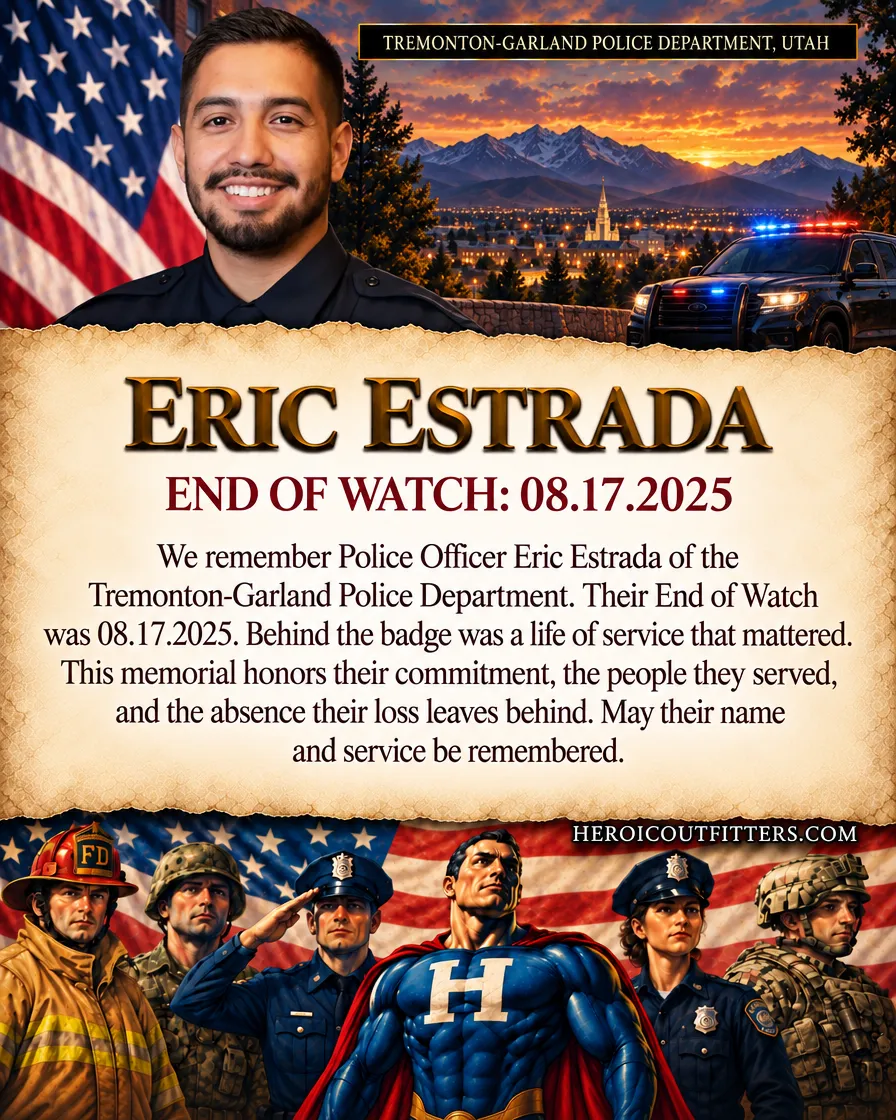
The Tremonton-Garland Police Department will remember Police Officer Eric Estrada as part of its history, but his family will carry him in a more intimate way—as a husband, a father, and a beloved presence whose life cannot be replaced. His service lasted eight years in law enforcement, less than one year with this department, and far beyond the measure of a single final call.
End of Watch: August 17, 2025. Eric Estrada was 32. His name should be spoken with care, his sacrifice remembered without embellishment, and his family surrounded by the respect owed to those left behind when a public servant is taken from them.