Heroic Outfitters
Related Articles



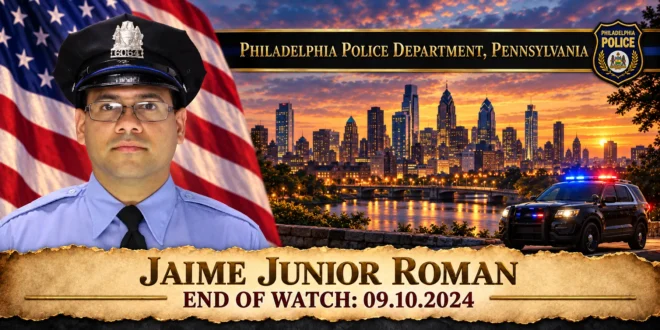
Philadelphia lost Police Officer Jaime Junior Roman not in some distant chapter of service, but in the middle of a duty that asks officers to step toward uncertainty. He was 31 years old when gunfire ended the future he still had every right to live. His badge, 6064, now carries a sorrow no number can contain.
Roman died on September 10, 2024, from wounds suffered during a traffic stop nearly three months earlier. Between those moments came a vigil of hope and heartbreak: he was transported to Temple Hospital and remained on life support until his wounds proved fatal. The loss is permanent, and it is painfully unfair.
A Routine Duty Turned Into Irreversible Violence
Roman and another Philadelphia Police Department officer initiated the traffic stop in Kensington. What began as an ordinary responsibility became a deadly encounter after officers observed a gun holster. The details are stark, but behind them was a human being doing work meant to protect a city and help keep danger from reaching someone else.
The fleeing subject turned and fired three shots. Roman was struck in the neck. There is no way to make that violence feel ordinary, and no responsible account should try. A public servant went to a traffic stop and was met with gunfire, leaving Philadelphia to confront the brutal fragility of a life devoted to public safety.
The harm did not end when the shots were fired. Roman was taken to Temple Hospital, where he remained on life support. For those who loved him and for the colleagues who carried the weight of his name, the intervening months could not restore what had been taken. They could only prolong the ache between hope and goodbye.
Six and a Half Years Given to Philadelphia
Roman served the Philadelphia Police Department for approximately six and one-half years. That span represents more than a line in a personnel record. It was a substantial portion of his adult life offered to a city whose streets, neighborhoods, and residents depended on officers willing to answer difficult calls.
He served as a police officer in Pennsylvania, carrying the obligations that come with the uniform and the badge marked 6064. The verified facts do not tell us every small kindness, every difficult conversation, or every person he helped. They do tell us enough to understand that his service was real, sustained, and costly.
At 31, Roman’s life should have held more time: more ordinary shifts, more conversations, more chances to step away from danger at the end of a day. Instead, his years of service culminated in a loss that cannot be measured only by the date of death. Philadelphia lost an officer, and many people lost the future they expected him to share.
The Anger Beneath the Mourning
Grief belongs at the center of Roman’s memorial, but grief is not the only honest response. Anger belongs here too. A traffic stop should never become a sentence of death for the person performing it. Roman’s life was taken by gunfire while he was carrying out a public duty, and that injustice deserves to be named plainly.
The verified account leaves no room for sentimental distance: three shots, a wound to the neck, a hospital vigil, and a death that came on September 10. These are not merely incident details. They are the outline of a life interrupted and of suffering imposed on everyone who had to wait, fear, hope, and finally mourn.
No tribute can reverse what happened. No words can return Roman to his colleagues or give back the years that were taken from him at 31. But remembering him accurately is a form of respect. It keeps his identity before the circumstances: Jaime Junior Roman, Philadelphia police officer, badge 6064, and a person whose life mattered beyond the manner of his death.
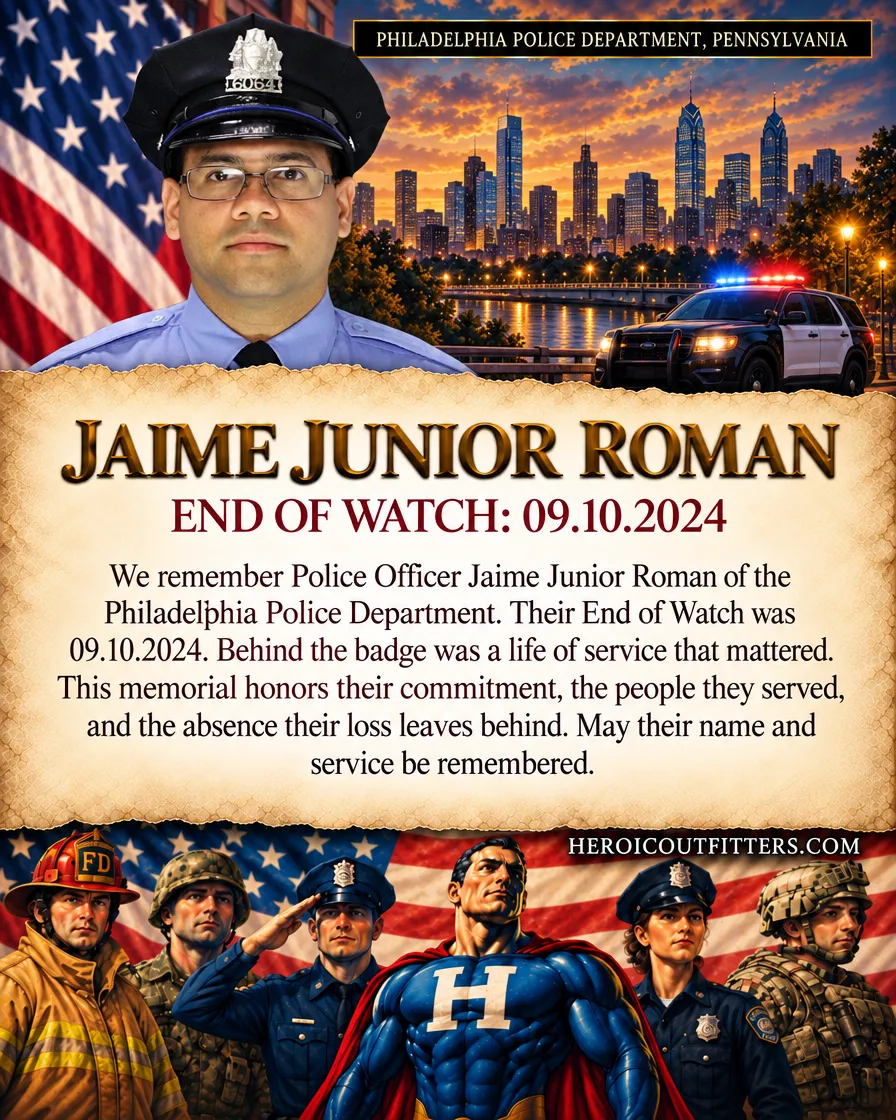
Philadelphia will carry Roman’s name alongside the hard truth of how he died. He served for six and one-half years, entered a traffic stop as part of that service, and endured wounds that ultimately overcame him. The passage of time may change the shape of the mourning, but it cannot make the loss less real.
Officer Jaime Junior Roman should be remembered as more than the victim of gunfire. He was 31, he wore Philadelphia’s uniform, and he gave years of his life to the city. His badge number, 6064, is now a permanent reminder of a public servant whose life should not have been taken and whose absence will never be repaired.