Heroic Outfitters
Related Articles

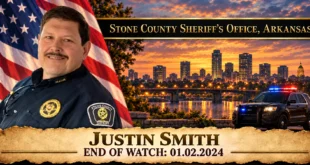

Matthew Henke Ruge was 27 years old when his life was taken in the course of serving Burnsville, Minnesota. He wore badge 183 as a police officer with the Burnsville Police Department, bringing the weight of a public trust into moments most people hope never to face.
On February 18, 2024, that trust carried Officer Ruge into a domestic-disturbance call where a male suspect had barricaded himself inside a home with several hostages. The day ended with gunfire, three public servants dead, and an absence that no ceremony can make less permanent.
A Call That Asked Everything of Him
The facts are stark, but they do not make the loss feel distant. Officer Ruge responded because someone needed help. Inside the home, a dangerous situation had placed hostages at risk, and the people outside depended on trained officers to confront what others could not safely confront themselves.
For approximately three and a half hours, negotiations continued. That long stretch of uncertainty carried its own burden: patience under pressure, attention to the lives inside, and the knowledge that one sudden decision could change everything. Ruge remained part of that effort until the situation turned violent.
As Officer Ruge was exiting the house, the suspect opened fire. Ruge was shot and later succumbed to his injuries at a hospital. A public servant who had answered a call for help did not return from it. That is not an abstract ending; it is the permanent breaking of a life at 27.
The People Left Behind Must Carry the Silence
The loss belongs first to the people who knew Matthew Henke Ruge as a person, and to the Burnsville Police Department that knew him as a colleague. The available record does not provide private family details, but the shape of this grief is unmistakable: a life ended, relationships altered, and a community forced to reckon with what service demanded from one of its own.
His badge number, 183, identifies an officer in official records. It cannot contain the whole of him. Behind that number was a 27-year-old man who went to work in a role built around protecting others, and whose final assignment placed him in extraordinary danger.
The sorrow is sharpened by how needless the violence was. Officer Ruge was not lost because the danger was unavoidable in some grand or noble sense. He was shot when a suspect chose to open fire during a response intended to protect hostages and bring a crisis to an end. The consequences fell on Ruge, his colleagues, and everyone left to mourn him.
A Department and a Community Marked by One Day
The suspect continued firing from an upstairs window, killing another officer and a firefighter-paramedic. Officer Ruge’s death therefore stands within a wider devastation: multiple public servants were taken while responding to the same barricaded-home crisis.
That fact does not lessen Ruge’s individual loss. It makes the violence more difficult to absorb. The call demanded courage from everyone who entered its orbit, and the price was measured in lives that should have continued beyond that February day.
Burnsville will remember Officer Ruge through the service represented by his uniform and badge, but remembrance should also preserve the injustice of the ending. He should have had more time. His colleagues should not have had to grieve him after answering a call. The people he served should not have learned that help had arrived at such a terrible cost.
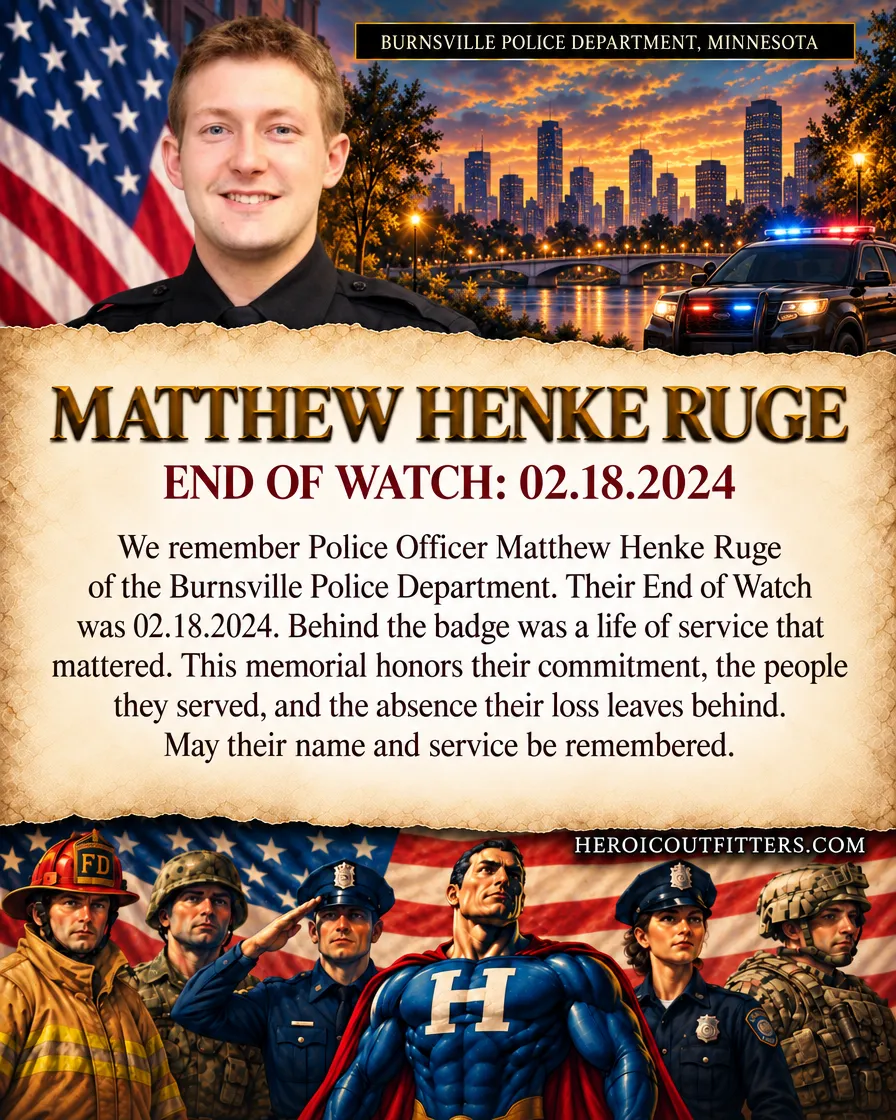
Matthew Henke Ruge’s end of watch was February 18, 2024. He was a Police Officer with the Burnsville Police Department, a 27-year-old public servant whose final response began with a duty to protect people in danger and ended with his death from gunfire.
May his name remain connected not only to the circumstances that took him, but to the courage required to answer. The grief is lasting, the absence is real, and the anger is justified: Matthew Henke Ruge was taken while serving others, and the people who loved and depended on him must live with that loss.