Heroic Outfitters
Related Articles



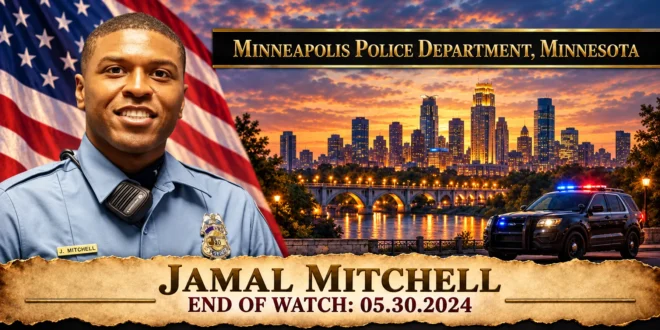
On May 30, 2024, Minneapolis lost Police Officer Jamal Mitchell to gunfire. He was 36 years old. His end of watch did not come after a long career measured in decades, but after approximately two years with the Minneapolis Police Department—a short span that still held the full seriousness of a promise made to protect others.
Officer Mitchell was responding to a shooting call when he was shot while attempting to render aid to someone he believed was an injured victim. That detail carries a particular heartbreak. In a moment shaped by danger and uncertainty, he moved toward a person he thought needed help. The loss is painful because his service was not abstract: it was expressed in that immediate, human choice.
The Human Decision Inside the Badge
A badge can become a symbol so familiar that it hides the person wearing it. Jamal Mitchell’s badge number was 4819, but a number cannot contain the weight of his life or the meaning of the decision that ended it. He was a 36-year-old police officer serving Minneapolis, entrusted with meeting people in moments when fear had already entered the room.
The verified facts leave no need for embellishment. Officer Mitchell answered a call about a shooting. He encountered someone he believed to be injured, and he tried to provide aid. That act was not a distant responsibility delegated to someone else; it was his response, made directly and urgently, to another person’s apparent suffering.
There is a deep unfairness in what followed. A public servant responding to violence was met with gunfire while trying to help. The person who went toward possible injury did not return home from that call. For those who knew Jamal Mitchell, and for the Minneapolis community he served, that absence is not a statistic. It is a permanent wound.
Two Years That Cannot Be Reduced to a Number
Officer Mitchell had served approximately two years with the Minneapolis Police Department. A brief tour can be described in a line, but it cannot be dismissed as a small contribution. Every shift carries the possibility of being called when others are frightened, hurt, or unable to face a crisis alone.
The record tells us what he did, not every way he was known. It does not supply private memories, family stories, or invented words to place in anyone’s mouth. What it does establish is enough to honor: Jamal Mitchell wore the Minneapolis badge, answered a dangerous call, and placed himself between uncertainty and a person he believed needed immediate aid.
That service ended on May 30, 2024. The date will remain fixed while the lives around it continue moving forward without him. A department will remember the officer assigned badge 4819; the people left behind must carry the fuller and more painful reality of losing Jamal Mitchell, a person whose life cannot be restored by ceremony or recorded accurately by a database.
The Anger Beneath the Grief
Grief is the first language of this loss, but it is not the only one. There is justified anger in knowing that Officer Mitchell was killed by gunfire while responding to a shooting and attempting to help. A needless act of violence cut short a life devoted, in part, to answering violence when others needed protection.
The tragedy is sharpened by the trust contained in his action. He believed the person before him was an injured victim. He acted on that belief. The danger was real, but so was the human obligation he saw in front of him. The result was devastating: the officer trying to render aid became the one whose life was taken.
No statement can make this fair. No memorial can return the years Jamal Mitchell should have had, or erase the sorrow borne by those who loved him and those who served beside him. Remembering him honestly means holding all of it together—the courage of his response, the horror of his death, and the anger that such a life was taken while he was trying to help.

Jamal Mitchell’s name now belongs to Minneapolis’s permanent record of loss, but he must not be reduced to an end-of-watch date or a cause of death. He was Police Officer Jamal Mitchell, badge 4819, a 36-year-old member of the Minneapolis Police Department who gave approximately two years of service and answered a call that placed another person’s need before his own safety.
On May 30, 2024, the city lost an officer who moved toward perceived injury and did not come home. The sorrow remains, and so does the question that grief cannot quiet: why should a person trying to help have been taken from the people who loved him? Minneapolis remembers Jamal Mitchell with respect, heartbreak, and the conviction that his sacrifice must never be treated as ordinary.