Heroic Outfitters
Related Articles
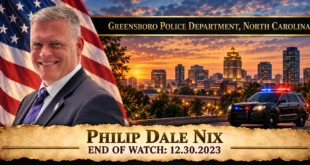
On December 23, 2024, Greensboro lost Police Officer Michael Horan to gunfire while he was answering a call meant to protect people from danger. He was 44 years old. The loss arrived just before Christmas, when families were meant to be together, and left a community facing the unbearable truth that a public servant had gone to help and would not return.
Officer Horan had spent seven years with the Greensboro Police Department after serving as a United States Coast Guard veteran. Those facts tell part of his story: a life repeatedly shaped by service, discipline, and responsibility. They cannot measure the grief of losing him, or the sorrow carried by everyone who knew him, worked beside him, or depended on the uniform he wore.
He Answered When Someone Needed Help
At approximately 11:00 a.m. on December 23, Officer Horan responded to a report of a man with a firearm inside a Food Lion on Lawndale Drive in Greensboro. The Associated Press reported that he was answering that call when he was fatally shot. What began as a request for protection became a permanent wound for his department and city.
The danger was not distant or abstract. It was a call in Greensboro, involving people who needed an officer to come. Horan went. That simple fact carries the terrible weight of this loss: when fear entered a public place, he moved toward it because service required him to do so.
There is no fair outcome in a life ending this way. A man who had already given seven years to the Greensboro Police Department was taken while carrying out the work entrusted to him. The grief is profound, and so is the anger at how needlessly a life devoted to protecting others was cut short.
A Veteran’s Years of Service
Before Greensboro knew him as a police officer, Michael Horan served in the United States Coast Guard. His path from the Coast Guard to the Greensboro Police Department reflects a sustained commitment to public duty, not a single moment of recognition. For seven years, he continued that commitment in North Carolina as a police officer.
The available record does not provide every detail of Horan’s life away from the badge, and it would be wrong to fill those silences with invention. What is known is enough to honor: he was 44, he had served his country, and he spent seven years serving Greensboro. Those years were given to a profession where answering the call can demand everything.
A memorial should hold space for the person, not reduce him to the circumstances of his death. Michael Horan was more than the gunfire that ended his life and more than the final call he answered. He was a Coast Guard veteran, a Greensboro police officer, and a human being whose absence now has a permanence no ceremony can undo.
The Loss Greensboro Must Carry
The Greensboro Police Department lost one of its own in the days before Christmas, and the season will forever carry the shadow of that absence. The public may know the time, the call, and the charges that followed. The people closest to Horan must live with what those facts cannot show: the empty space left by his death and the future that was taken from him.
The suspect was apprehended and charged with first-degree murder, according to the supplied official memorial record. That legal development matters, but it cannot restore Michael Horan. Accountability may follow, yet no courtroom can return the officer who responded when people were in danger or erase the sorrow that began when he was shot.
Greensboro is left to remember a man whose service reached from the Coast Guard to local streets, and whose final act was also an act of service. His death deserves more than a brief entry in a record. It deserves grief spoken plainly, respect offered without exaggeration, and the honest recognition that this loss should never have happened.
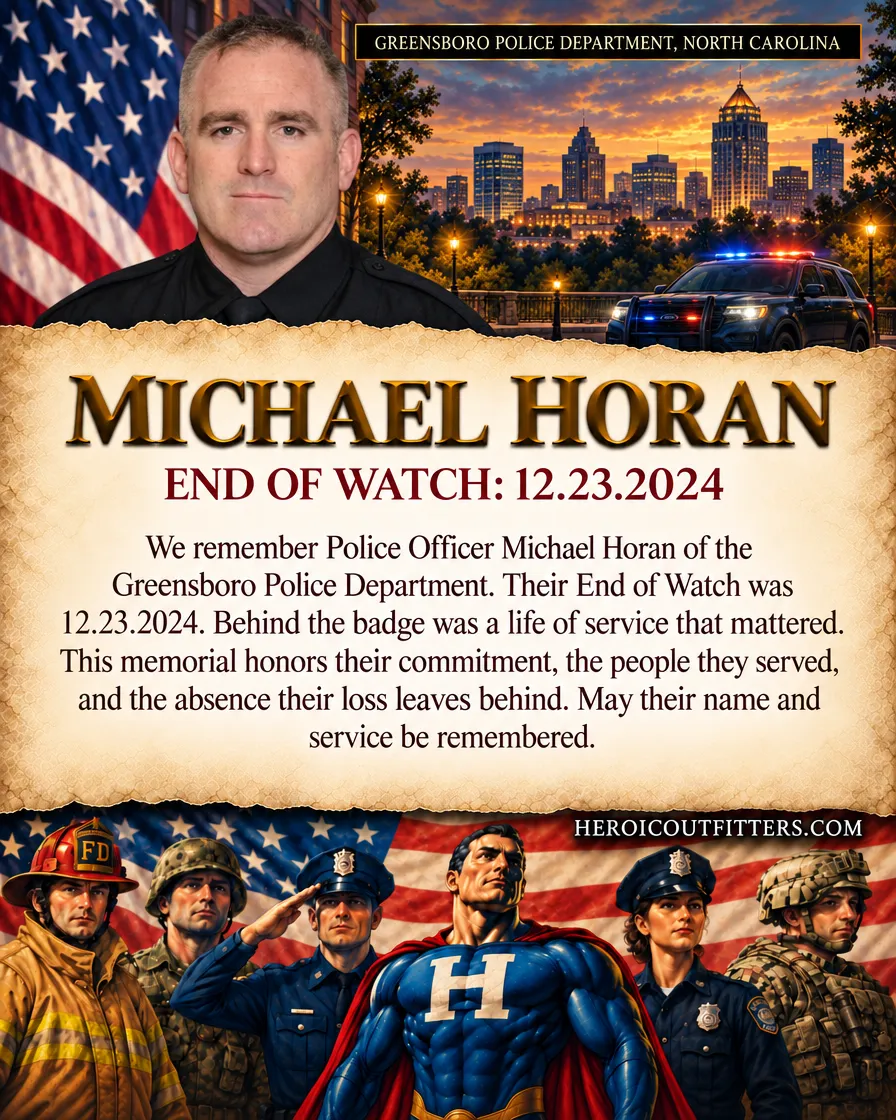
Michael Horan’s name now belongs to the history of the Greensboro Police Department, but he should not be remembered only as a name on a memorial. He was 44 years old, a Coast Guard veteran, and a police officer who gave seven years to Greensboro. On December 23, he answered a dangerous call and paid for that service with his life.
The sorrow left behind cannot be made smaller by words, and the injustice of his death cannot be softened into routine. Greensboro has lost a protector; those who loved and respected Michael Horan have lost a person who cannot be replaced. His service remains, his sacrifice remains, and so does the ache of knowing he should still be here.